

Choosing a welding gas should not feel like guesswork. The right shielding gas can improve arc stability, bead shape, wetting, penetration, productivity, and rework rates. The wrong one can drive spatter, porosity, lack of fusion, inconsistent bead profile, and unnecessary post-weld clean-up.
This guide is designed to help workshops, fabricators, maintenance teams, and production environments across New Zealand select a suitable shielding gas based on process and application. It is written for real-world decision-making, including how to narrow your options quickly, what to prioritise, and when it is worth upgrading to higher performance blends.
Throughout the article, you will find internal links to relevant Coregas resources and product pages, including the Coregas welding application overview and the welding gases range page.
Welding application overview: Welding and metal fabrication
Browse product range: Welding gases
Quick terminology: MIG vs MAG vs TIG vs FCAW
Before selecting a gas, align on the process, because gas selection differs by process and material.
MIG (GMAW) for non-ferrous: commonly refers to gas metal arc welding where the shielding gas is inert (often argon-based) and materials include aluminium, copper, and alloys.
MAG (GMAW) for carbon steels: commonly refers to gas metal arc welding where the shielding gas includes active components like CO₂ or O₂.
TIG (GTAW): tungsten inert gas welding, typically argon or argon-based mixtures, often used for stainless, aluminium, and precision work.
FCAW: flux-cored arc welding, which may be self-shielded (no gas) or gas-shielded (often with CO₂ or argon-CO₂ blends depending on wire and procedure).
If you are working to a WPS (Welding Procedure Specification), always treat the WPS as the governing document for gas type, flow rate, and parameters.
What shielding gas is actually doing at the arc
A shielding gas is not only “keeping oxygen out”. It affects multiple behaviours at once:
Protects the molten weld pool from atmospheric contamination (oxidation and nitrogen pickup).
Stabilises the arc and influences how the arc transfers heat into the joint.
Changes surface tension and wetting (how the bead spreads and ties in at the toes).
Influences spatter levels and droplet transfer behaviour.
Influences penetration profile and productivity (travel speed).
Can support or reduce oxide formation depending on the mix and material.
Because each mix changes several behaviours at once, selection should start with the process and material, then narrow based on thickness, weld position, and productivity or appearance requirements.
A practical selection framework (use this first)
Use these steps to reduce your choice to one or two gases.
Step 1: Confirm the process
MIG or MAG with solid wire
TIG
FCAW gas-shielded
Step 2: Confirm base material
Carbon steel (mild steel)
Stainless (austenitic, duplex)
Non-ferrous (aluminium, copper and alloys)
Step 3: Consider thickness and condition
Thin sheet vs structural sections
Clean plate vs mill scale vs oily/dirty surfaces
Fit-up quality and joint type
Step 4: Define the priority outcome
Choose the top 1 to 2 outcomes you care about most:
Minimal spatter and clean appearance
Higher deposition and productivity
Improved penetration and tie-in
Better performance on dirty plate
Reduced rework, reduced post-weld clean-up
Metallurgical or corrosion-performance considerations (common in stainless and duplex)
Step 5: Validate availability and supply
If you need consistent production, also consider cylinder logistics and supply support:
MIG and MAG on carbon steel: start with argon blends, then tune CO₂ and O₂
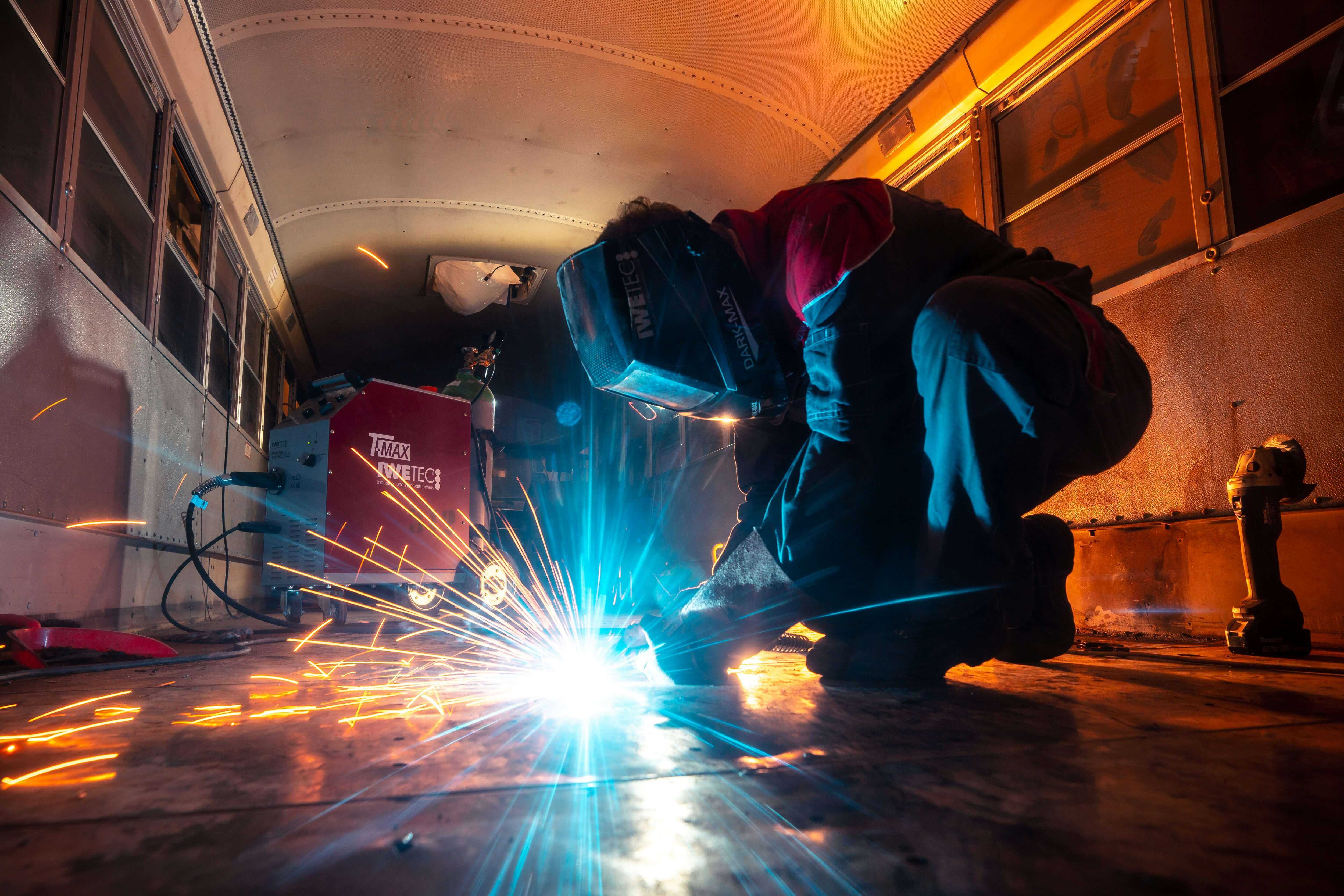
For carbon steel GMAW, argon-based blends with CO₂ and or O₂ are common because they offer a controllable arc and strong welds, while tuning bead shape, spatter, and transfer behaviour.
Coregas options commonly used for carbon steel MIG and MAG
Browse the range here: Coregas welding gases
Below are common options within the Coregas range:
Coregas 07 (Argon balance + oxygen 5–9%)
Premium option used primarily for MIG on carbon steel, commonly associated with a stable arc and low spatter for thin panel work.
Product page: Coregas 07Coregas 09 (Argon 91% + CO₂ 9%)
Argon-CO₂ blend used for MIG on carbon steel, noted for arc stability and bead shape.
Product page: Coregas 09Coregas 18 (Argon balance + CO₂ 16–20%)
Used where heavier section and spray transfer are relevant, also referenced for FCAW applications.
Product page: Coregas 18Coregas 25 (Argon 75% + CO₂ 25%)
Positioned for heavy section and short arc work, including reducing porosity risk where plates are dirty, oily, or have mill scale.
Product page: Coregas 25Coregas 5/2 (Argon 93% + CO₂ 5% + O₂ 2%)
Designed to combine CO₂ bead-shaping and oxygen-driven wetting behaviour, positioned for MIG on steel up to 8 mm, including positional control and a wider bead profile.
Product page: Coregas 5/2
How to choose between these carbon steel options (decision rules)
If you weld thin sheet and want a stable, low spatter arc
Start with Coregas 07 if your work matches thin panel and sheet applications.
If you need an “all thicknesses” MIG carbon steel blend with good appearance and low spatter
Consider Coregas 09.
If you weld heavy section material and care about productivity and transfer behaviour
Consider Coregas 18.
If your steel is not perfectly clean, or you see porosity risk due to surface condition
Consider Coregas 25 for short arc work where plate condition is a practical constraint.
If you need positional control and want a wide bead profile with tuned wetting
Consider Coregas 5/2.
Common carbon steel MIG problems and what to check first
If you are troubleshooting, gas choice matters, but it is rarely the only variable. Use this list to prioritise checks.
Spatter is high
Confirm polarity and wire type
Confirm stick-out and torch angle
Check parameters (voltage and wire feed speed balance)
Confirm you are using a gas suited to your transfer mode and material thickness
If you are selecting gas, compare options like Coregas 07 and Coregas 09 for cleaner running behaviour, depending on your application
Porosity
Check leaks, loose fittings, damaged hoses, and contaminated nozzles
Check gas flow and drafts at the weld zone
Confirm base metal cleanliness and consumables storage
If your plate condition is a recurring constraint, review Coregas 25 positioning for dirty, oily, or mill scale plate
Lack of fusion or inconsistent tie-in
Check heat input, travel speed, torch angle, and joint prep
Confirm your gas and parameters are aligned with your intended transfer mode and thickness
TIG on stainless steel: focus on shielding quality and corrosion-sensitive outcomes
TIG welding on stainless often prioritises weld cleanliness, control, and metallurgical outcomes. Where corrosion performance is critical, shielding choices and purge practices matter.
Coregas stainless TIG option highlighted in the range
Shieldpro 23 (Argon 98% + nitrogen 2%)
Positioned for TIG welding stainless of all thicknesses and referenced for orbital TIG applications, with nitrogen added to reduce nitrogen loss from the weld metal and support corrosion properties.
Product page: Shieldpro 23
When Shieldpro 23 may be relevant
You are TIG welding stainless where corrosion performance matters and the procedure allows for an argon-nitrogen blend
You are doing orbital TIG welding on stainless applications
You want to explore gas options beyond pure argon within a controlled procedure
If you need help confirming suitability for your application and WPS, Coregas has technical support pathways:
MIG on stainless and duplex: helium blends for speed, penetration, and bead profile
Stainless and duplex welding often balances productivity with surface appearance and metallurgical outcomes. Helium is commonly used in blends to increase heat in the arc and support productivity and penetration.
Coregas stainless and duplex MIG options
Shieldpro 30 (Argon 78% + helium 20% + CO₂ 2%)
Positioned for MIG welding of stainless steels and duplex (3 mm and above), highlighting helium-driven improvements in speed, penetration, profile, and surface appearance.
Product page: Shieldpro 30Shieldpro 31 (Argon 62.2% + helium 35% + CO₂ 2.8%)
Positioned for MIG welding stainless steels of all thicknesses, with an emphasis on deposition rates and smooth surface appearance.
Product page: Shieldpro 31
How to choose between Shieldpro 30 and Shieldpro 31
A practical way to choose is to start with application fit, then test for productivity and bead appearance within your procedure.
If your work aligns with stainless and duplex, especially where 3 mm+ is common, review Shieldpro 30
If you are looking for a stainless MIG blend positioned across all thicknesses, review Shieldpro 31
For a workshop running varied stainless jobs, it is common to shortlist one blend, validate arc feel and bead profile on your typical joints, then standardise.
Non-ferrous MIG and TIG: helium-argon mixes for copper, alloys, and thicker sections
Non-ferrous welding can require different arc characteristics and heat input behaviour than carbon steel. Helium-argon mixes are commonly used to support welding on non-ferrous metals, including copper and alloys, particularly as thickness increases.
Coregas helium-argon options
Shieldpro He25 (Helium balance + argon 73%)
Positioned for MIG and TIG welding of non-ferrous steel, copper and alloys above 3 mm.
Product page: Shieldpro He25Shieldpro He50 (Helium 50% + argon 50%)
Positioned for MIG and TIG welding of non-ferrous steel, copper and alloys above 3 mm.
Product page: Shieldpro He50Shieldpro He75 (Helium balance + argon 27%)
Positioned for MIG welding of non-ferrous steel above 6 mm, highlighting smooth arc and surface appearance.
Product page: Shieldpro He75
How to choose between He25, He50, and He75
A practical approach is to scale helium content with thickness and heat demand, within your procedure.
For non-ferrous work above 3 mm where you want helium-assisted performance, start with Shieldpro He25 or Shieldpro He50
For thicker non-ferrous sections above 6 mm where higher performance is positioned, review Shieldpro He75
If you want help choosing a blend based on your materials and thickness range, use:
FCAW: confirm whether the wire is self-shielded or gas-shielded
FCAW can be either:
Self-shielded (no external shielding gas)
Gas-shielded (requires shielding gas)
If you are running gas-shielded FCAW, your wire and WPS will typically determine whether you should use CO₂, argon-CO₂ blends, or another mix. In the Coregas range, some carbon steel mixes are positioned as applicable to FCAW in certain contexts.
A good starting point is to browse the overall welding gases list and compare it to your wire manufacturer guidance:
Purging and backing gas: do not treat this as optional on corrosion-sensitive work
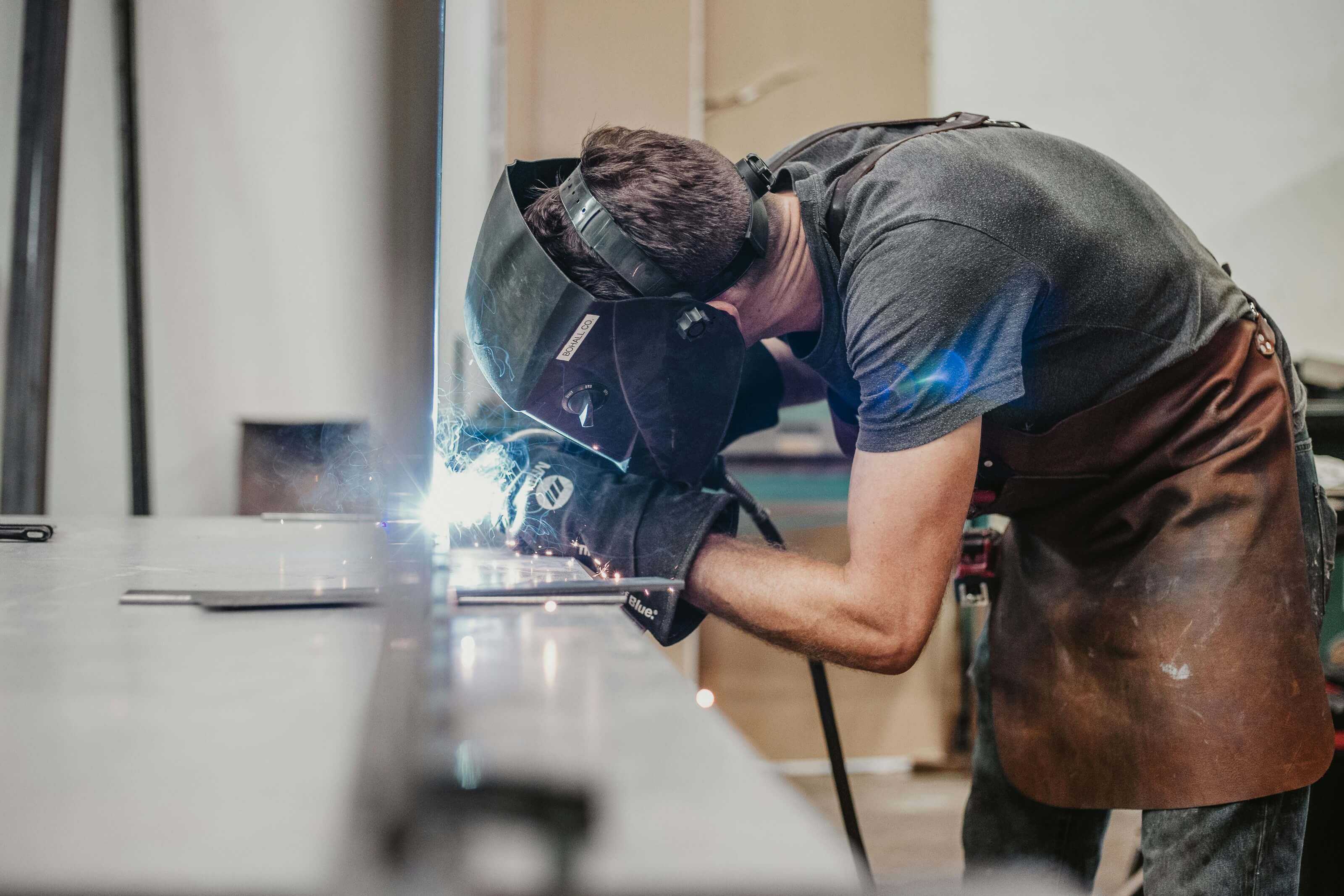
For stainless and nickel alloy work, purge practices can be critical, especially where the backside of the weld must be protected to meet quality and corrosion requirements.
Coregas purge and tracer gas option
Shieldpurge 95/05 (Nitrogen 95% + hydrogen 5%)
Positioned mainly as a backing gas in purge welding of austenitic stainless steel and nickel alloys, and also used for leak testing as a tracer gas.
Product page: Shieldpurge 95/05
If you are working in high-spec purge environments (for example, pharmaceutical-type applications), it is worth aligning purge gas selection, purge technique, and acceptance criteria early.
Gas handling and safety: include this in every weld shop SOP
Shielding gases are industrial products and must be handled and used correctly. Your operating environment, cylinder storage, transport, and regulator setup all matter.
Coregas provides safety resources here:
If you need SDS documentation for a specific gas, use the Coregas SDS download pathway:
How to buy welding gases in New Zealand through Coregas
If you are comparing gases and want to confirm availability, delivery options, or set up a purchasing workflow, these pages make it easy:
Find a nearby branch or stockist: Store Finder
Buying options: How to buy
Account setup: Open an account
Delivery and collection: Delivery and collection
Speak with the team: Contact Coregas
Want help selecting the right welding gas?
If you tell Coregas your process (MIG, TIG, FCAW), material, thickness range, and your priority outcome (appearance, productivity, penetration, corrosion performance), you can usually shortlist the right gas quickly.
Talk to Coregas: Contact
Find local supply: Store Finder
Browse all options: Welding gases
FAQ
-
1) What is the difference between MIG and MAG gas?
MIG typically refers to inert shielding gas use (commonly for non-ferrous), while MAG typically uses an argon blend that includes active components like CO₂ or O₂ for carbon steel. Your material and procedure determine what is appropriate.
-
2) Which Coregas gas is suited to carbon steel MIG on thin sheet?
Coregas positions Coregas 07 for sheet metal and thin panel steel up to 6 mm. See: Coregas 07
-
3) Which Coregas gas is positioned for carbon steel MIG across thicknesses?
Coregas positions Coregas 09 for MIG welding steel of all thicknesses. See: Coregas 09
-
4) What if my steel is dirty or has mill scale and I am seeing porosity risk?
Coregas positions Coregas 25 for short arc welding with less risk of porosity where plates are dirty, oily, or have mill scale. See: Coregas 25
-
5) What gas is positioned for stainless and duplex MIG at 3 mm and above?
Coregas positions Shieldpro 30 for MIG welding of stainless steels and duplex 3 mm and above. See: Shieldpro 30
-
6) What gas is positioned for stainless TIG and orbital TIG work?
Coregas positions Shieldpro 23 for TIG welding stainless steel and references orbital TIG applications. See: Shieldpro 23
-
7) When should I consider helium-argon mixes for non-ferrous welding?
Coregas positions Shieldpro He25 and Shieldpro He50 for non-ferrous steel, copper and alloys above 3 mm, and Shieldpro He75 for non-ferrous steel above 6 mm.
-
8) What is Shieldpurge 95/05 used for?
Coregas positions Shieldpurge 95/05 mainly as a backing gas for purge welding of austenitic stainless steel and nickel alloys, and also as a leak testing tracer gas. See: Shieldpurge 95/05