- Home
- Applications
- Calibration
Calibration
Laboratory analysers and process instrumentation require frequent calibration with high precision specialty gases mixtures.
Laboratory analysers and process instrumentation require frequent calibration with high precision specialty gases mixtures.
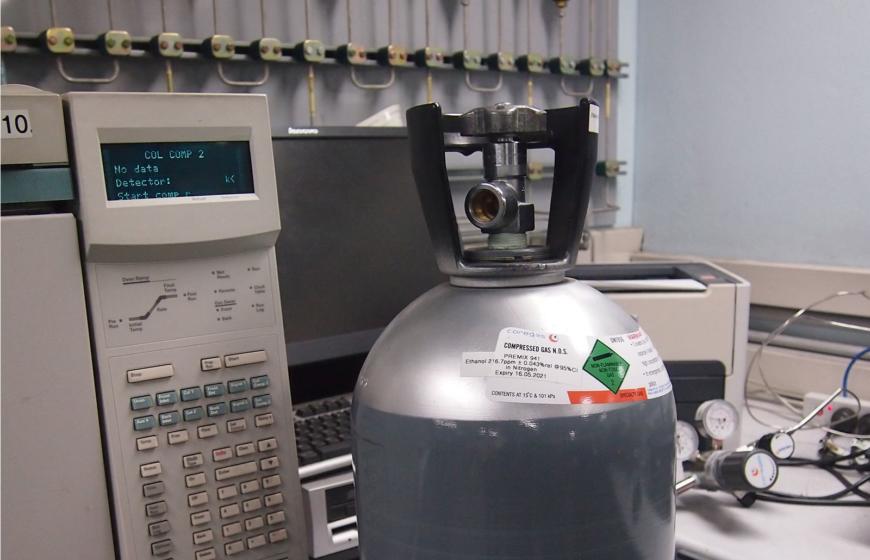
For safety in industries such as the petrochemical processing industry, the use of gas detection systems is common. These systems sniff for flammable and toxic gases in the air and trigger an alarm when dangerous conditions are encountered. Gas detection systems require frequent functionality testing with calibration gas mixtures. They also require calibration at regular intervals with accredited reference materials, a high quality type of calibration gas mixture.
The sophisticated equipment used in laboratories for forensic science, biotechnology research and petrochemical quality assurance all require diverse ranges of calibration mixtures.
To ensure that chemicals processes, combustion operations and refining operations are optimised, it is important to measure and control process parameters using process instrumentation. These instruments require periodic calibration with certified calibration gas mixtures.
Gas emissions from cars, trucks and factory stacks contain pollutant chemicals such as nitric oxide and carbon monoxide. These must all be measured with high accuracy to ensure that our environment remains unpolluted and the air around us is healthy to breathe. The instruments used for these purposes require validation with high precision calibration gas mixtures at frequent intervals to ensure compliance with local legislation.
Calibration gases are precisely defined reference gases and gas mixtures used to test, adjust and verify gas detectors, gas analysers and similar instruments to support accurate performance. Coregas manufactures a wide range of calibration gas products, often custom-made, to suit different industries and measurement requirements.
Gas detection systems (fixed and portable): Routine servicing and verification using suitable calibration gas mixtures.
Laboratory analysers: Calibration to maintain confidence in analytical measurements.
Process instrumentation: Span gas or test gas for process control analysers that monitor gas and liquid streams.
Emissions monitoring (including CEMS): Calibration mixtures to validate monitoring instrumentation used for compliance and environmental reporting.
Air quality monitoring: Mixtures for highly sensitive instruments measuring ambient pollutants at low concentrations.
Vehicle emissions and type approvals: Traceable calibration gas mixtures to support emissions testing requirements.
Wide range, often custom-made: Calibration gases are one of the broadest product categories in the specialty gases portfolio.
Options for different confidence levels: Where required, calibration mixtures can be supplied with higher traceability and accreditation aligned to application needs.
Practical supply formats: Options include portable cylinder solutions for field work and remote sites.
Support across industries: Coverage from gas detection and air monitoring through to process control and emissions monitoring.
Standard and custom calibration gas mixtures to suit instrument type, method and measurement range.
Span gas and test gas options for process analysers and compliance instrumentation.
Portable calibration cylinders for field servicing, remote locations and fixed system verification.
Sector-specific mixtures for gas detection, air quality, emissions monitoring and vehicle testing.
Where calibration work happens in the field, compact and lightweight portable cylinders are a convenient option for taking calibration gas mixtures to remote locations such as fixed gas detection systems and smokestacks. Coregas also offers a return service approach for portable cylinders, supporting simpler end-of-use handling.
Use the correct mixture for the instrument: Match gas composition, balance gas, concentration range, and required certification level to the analyser or detector specification.
Check cylinder labels and documentation: Confirm mixture details, expiry or stability period, and storage requirements before use.
Prevent contamination: Use the correct regulator and fittings, keep caps on when not connected, and avoid introducing moisture or particulates into sampling lines.
Ventilation matters: Use calibration gases in well-ventilated areas and follow site procedures for gas handling.
Secure cylinders: Store and use cylinders upright and restrained to prevent tipping or impact damage.
Follow SDS and site rules: Always align with the product SDS and your internal safety procedures.
Calibration gases can vary significantly in composition, so transport requirements and hazardous classifications depend on the specific mixture and cylinder label. Always transport cylinders upright and secured in a ventilated vehicle compartment, keep valves closed and protected, and follow the SDS and any relevant carriage requirements for the product supplied.
Coregas can support delivery or collection options depending on location and product availability. For stocked gases, delivery timelines may differ from rarer gases and special mixtures.
Calibration gases are reference gases and gas mixtures used to test and adjust gas detectors, gas analysers and similar instruments so they perform accurately.
Yes. Coregas supplies calibration gas mixtures used for servicing and verification of fixed and portable gas detectors.
Yes. Calibration gases are often custom-made to suit different instruments, methods and measurement ranges.
Span gas (also called test gas) is a calibration gas mixture used to set or verify an instrument response at a known concentration during calibration.
Yes. Coregas supplies calibration gas mixtures used to validate continuous emissions monitoring system instrumentation.
Yes. Portable cylinder options are available for taking calibration gas mixtures to remote locations and field servicing requirements.
Confirm your instrument manufacturer requirements for gas composition, concentration range, balance gas, cylinder type, and any required certificate or traceability level. If unsure, share the instrument details with Coregas for guidance.
Store cylinders upright and restrained in a well-ventilated area, protect valves when not connected, and follow the SDS and site safety procedures for the specific mixture.