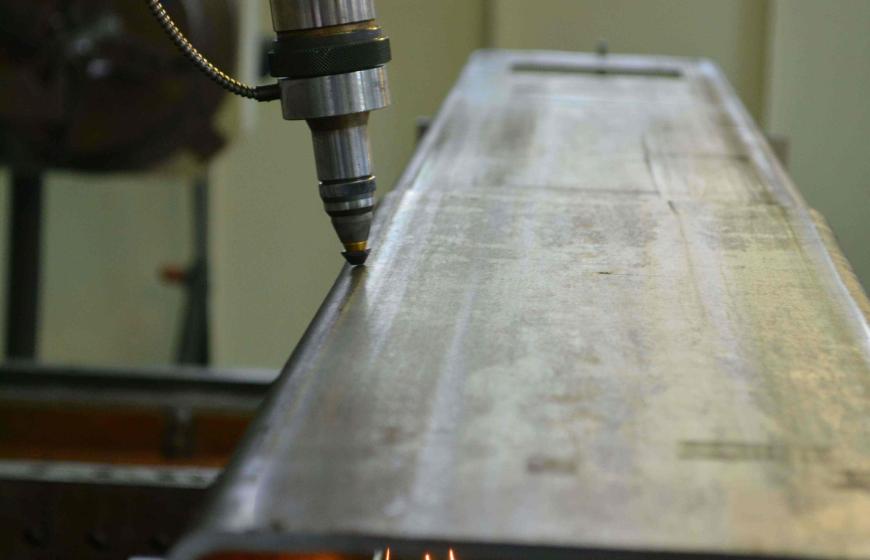


When results live or die on background chemistry, ordinary nitrogen won’t cut it. Nitrogen 5.0 (≈99.999% purity) is engineered for low moisture, low oxygen, and ultra-low total hydrocarbons, making it the sweet spot for analytical instrumentation, electronics assembly, laser/precision welding, and controlled-atmosphere manufacturing. Unlike utility inert gases, N₂ 5.0 is designed to keep signal noise, ghosting and surface oxidation out of your workflow — provided you protect its purity from the cylinder outlet to the point of use. Coregas’ product page specifies ≥99.999% N₂, with typical O₂ ≤ ~3 ppm and H₂O ≤ ~5 ppm, and lists compressed-cylinder and cryogenic liquid options along with UN numbers and size codes for New Zealand supply.
What “5.0 Purity” Really Buys You (In the Lab, on the Line, and in the Field)
In the lab — flatter baselines, stronger S/N, fewer re-runs
In GC and LC-MS interfaces, spurious background oxygen or moisture will raise the baseline, amplify drift and increase the number of re-runs you need for confidence. Using Nitrogen 5.0 as a carrier/neb gas (or make-up) minimises those artefacts, improves signal-to-noise (S/N) and stabilises retention time and response factor behaviour. Coregas’ analytical application pages reinforce this by recommending Nitrogen 5.0 as an LC-MS nebuliser gas for high-flow sprays and calling out 5.0 as a standard for instrument blanketing and purging.
H3: In electronics and precision manufacturing — brighter surfaces, better yield
Oxidation and moisture are enemies of solderability, plating, sputtering and sintering. Ultra-clean nitrogen lets you hold the line on oxygen and humidity around workpieces and components so you see cleaner wetting and fewer cosmetic rejects, particularly in post-reflow cosmetic criteria and bond integrity checks.
On laser/precision welding — steadier HAZ, fewer discoloured surfaces
In applications where nitrogen is specified (tooling, cover-gas envelopes, or selected alloy work), 5.0 helps reduce heat-tint and oxidation, maintain optics cleanliness, and stabilise HAZ appearance for QA acceptance without extra finishing.
Purity Handling 101 — How to Keep 5.0 as 5.0
The cylinder gives you the specification. Your gas path decides whether you keep it. Think of purity handling as a short chain where the weakest link dominates.
Materials & components
Regulators: Choose clean-service/stainless-steel regulators (ideally 316L) with low creep. Avoid general-purpose regulators with high outgassing or porous seats.
Tubing & fittings: Prefer 316L stainless (or electropolished where available). Avoid elastomers in critical runs; use face-seal or high-integrity compression fittings to minimise permeation.
Changeover without air ingress
Cylinder swaps are a massive purity risk. Mitigate with:
Automatic changeover manifolds sized for your flow; they keep the tool online while cylinders switch.
Check valves at strategic points to prevent backfill.
Purge routines that sweep air out of stubs before reconnection.
Downstream purification (only if the method needs it)
If your SOP, method or customer requires ppb-level H₂O/THC control, add point-of-use purifiers matched to your maximum flow and expected contaminant load. Place them as close as possible to the instrument.
Validation: trust, but verify
Instrument-side O₂ and H₂O monitors at the point of use pay for themselves. Trend your baselines: when the numbers creep, find it early (leaky fitting, exhausted purifier, changeover error) before results or yields move.
Applications Playbook — Practical Setups with Nitrogen 5.0
Carrier/make-up gas for GC (and LC-MS interfaces)
Goal: Smooth baselines and reproducible response factors.
Setup: Stainless regulator → stainless line → optional purifier → mass-flow or capillary-ready control → instrument.
Tip: Stabilise with the instrument manufacturer’s warm-up routine; log baseline noise daily for QC trending.
Gloveboxes and inert-atmosphere enclosures
Goal: Keep O₂/H₂O in the low-ppm range (or ppb, if specified).
Setup: 5.0 supply → high-integrity changeover → purifier (if needed) → enclosure with monitoring and recirculation; confirm with atmosphere sensors.
Tip: Avoid frequent door cycles; implement antechambers with defined purge times.
Laser & precision welding / AM (additive manufacturing)
Goal: Minimise oxidation of hot surfaces, maintain optics clarity, protect powder/media.
Setup: 5.0 feed → flow control → nozzle/envelope → extraction with filtration.
Tip: Keep pressure differentials positive into clean zones; check that your fume extraction doesn’t induce cross-flow where it shouldn’t.
Electronics reflow & conformal coating
Goal: Better wetting, reduced voids, improved cosmetic acceptance.
Setup: 5.0 blanketing within the oven/booth with controlled gas exchange; validate O₂ parts-per-million at the machine’s reference port.
Tip: Document your ppm set-points in the work instruction; treat excursions as non-conformances.
Safety Essentials (NZ) — Non-Flammable, Gas Under Pressure, Asphyxiant
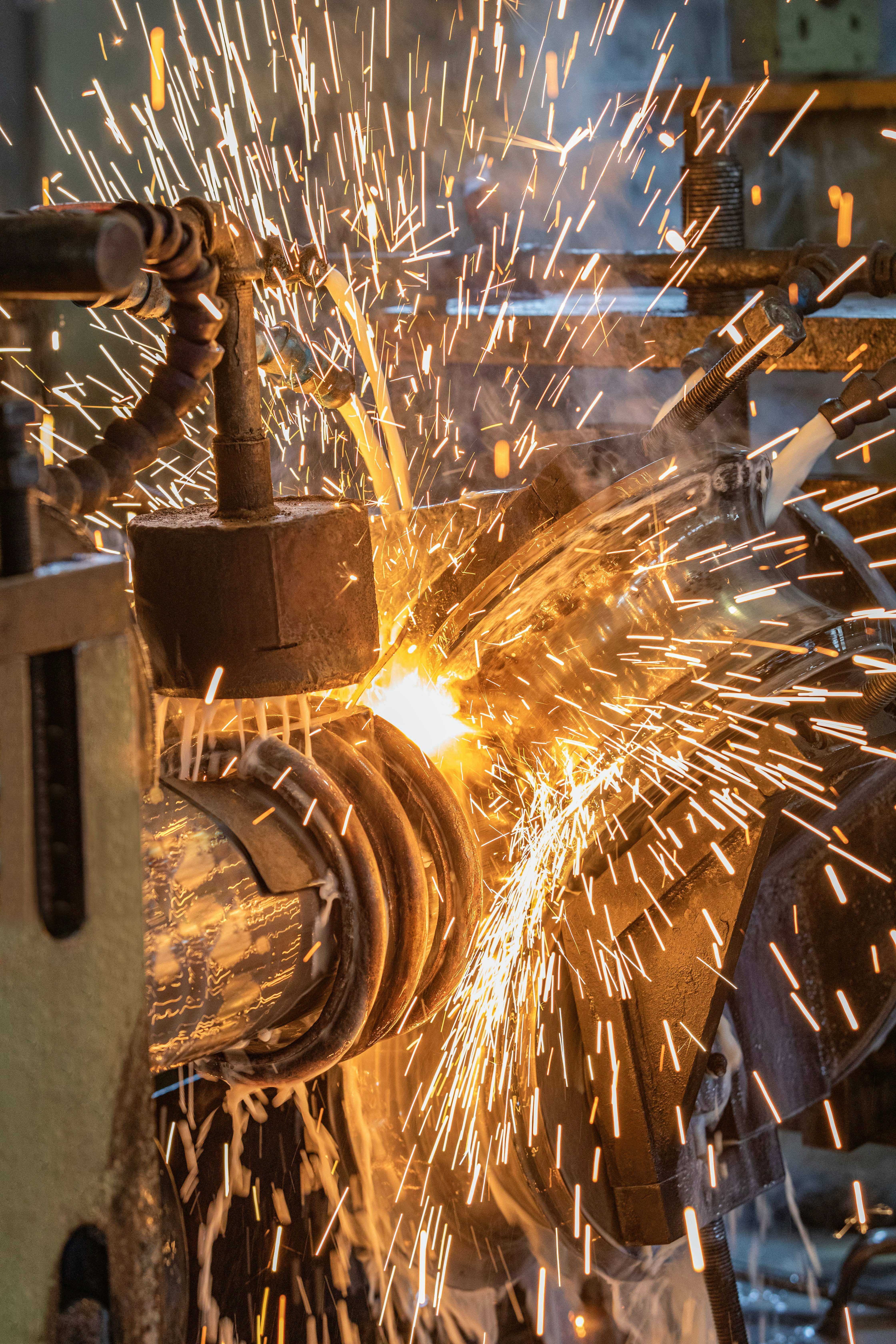
Nitrogen 5.0 is non-flammable — but the data sheet classification still matters: “Gas under pressure; may explode if heated” (H280). Store and handle cylinders upright, restrained, in dry, well-ventilated spaces out of heat and traffic. All gases under pressure, even non-hazardous ones like nitrogen, must comply with WorkSafe NZ requirements and the Hazardous Substances Regulations; WorkSafe’s “Gases under pressure” summary and the “Guide to gas cylinders” outline controls for approval, identification, handling and storage.
For transport and site identification, N₂ as a compressed gas is UN 1066, Class 2.2 (non-flammable, non-toxic gas). Third-party NZ SDS sources list Hazchem 2T, which you can adopt in your driver brief and emergency card. Secure cylinders upright, close and cap valves, and ventilate the vehicle compartment — especially in vans and utes.
Asphyxiation remains the key risk: nitrogen can displace oxygen quickly in pits, plant rooms and enclosures. Use monitors and ventilation, and make confined-space entry controls non-negotiable. (Coregas’ Safety & SDS hub consolidates safety literature and NZ/ANZIGA guidance you can embed into SOPs and toolbox talks.)
Logistics in NZ — Sizes, Multi-Packs, and Cryogenic
Coregas lists multiple compressed cylinder sizes for Nitrogen 5.0 (e.g., D, E, G) and 6-/12-packs for high usage, along with cryogenic (UN 1977) liquid supply for large continuous demand; the product page includes volume/pressure/outlet details and NZ-wide availability. Pairing instrument gas cylinders with automatic changeover keeps baselines stable across shifts and reduces operator intervention.
If your volume spikes, consider the “Size options” overview to plan for larger packs or bulk tanks; it explains Coregas’ range from single cylinders to reticulated bulk supply, which can be a step change for uptime and safety (less handling).
Implementation Patterns — Copy/Paste into Your SOP
Clean-service connection procedure
Don PPE; verify area ventilation.
Verify cylinder label (Nitrogen 5.0), pressure, and UN 1066 marking.
Crack valve momentarily to blow dust (per your site rules).
Fit stainless regulator; torque to spec; leak-test with oxygen-safe method.
Purge downstream line; validate O₂/H₂O at the tool; log baselines.
Automatic changeover routine
Confirm both bottles in service; primary/secondary setpoints.
Perform controlled purge on the “standby” side after the swap.
Check analyzers; record setpoint return-to-normal.
Affix tag to the empty; move it to the designated rack; arrange pickup.
Point-of-use purifier maintenance
Track breakthrough hours vs flow; set a conservative change-out interval.
Replace cartridges hot-swap if system allows; re-validate analyzers.
Log serials and dates for QA.
FAQs
- Is Nitrogen 5.0 flammable?
-
Can we run 5.0 and utility nitrogen on the same manifold?
Not advisable. The manifold’s cleanliness and materials determine delivered purity. Keep dedicated 5.0 paths with clean-service components.
-
Do we need downstream purifiers if we already buy 5.0?
Only if your method/SLA requires ppb-level control or you have a long, complex gas path. Start by measuring O₂/H₂O at the tool; decide from data.
- What UN number and class should we put on driver briefs?
- Do we need special regulators?
Internal Links & Conversion
Welding & nitrogen hub for adjacent grades and accessories.
Safety & SDS for NZ-relevant literature and training posters.
Size options to compare single cylinders, multi-packs and bulk.
Conclusion — If Purity Is a Variable, Your Results Are Too

Nitrogen 5.0 turns the gas line from a risk to a control. By combining spec’d purity (≈99.999% with single-digit ppm moisture/oxygen) and clean-service engineering (stainless regulators, high-integrity fittings, changeover, monitors), you remove a giant source of variability from lab baselines, reflow yield, laser envelopes, and glovebox atmospheres. Put the purity-handling steps in your SOP, wire in the monitors, and let the data do the convincing. For ongoing supply, choose the cylinder size or pack that fits your consumption pattern and line up a standing order so your process never breathes air.